Driving forward: CV insights from the SMMTInternational Automotive Summit 2025
26 Jun 2025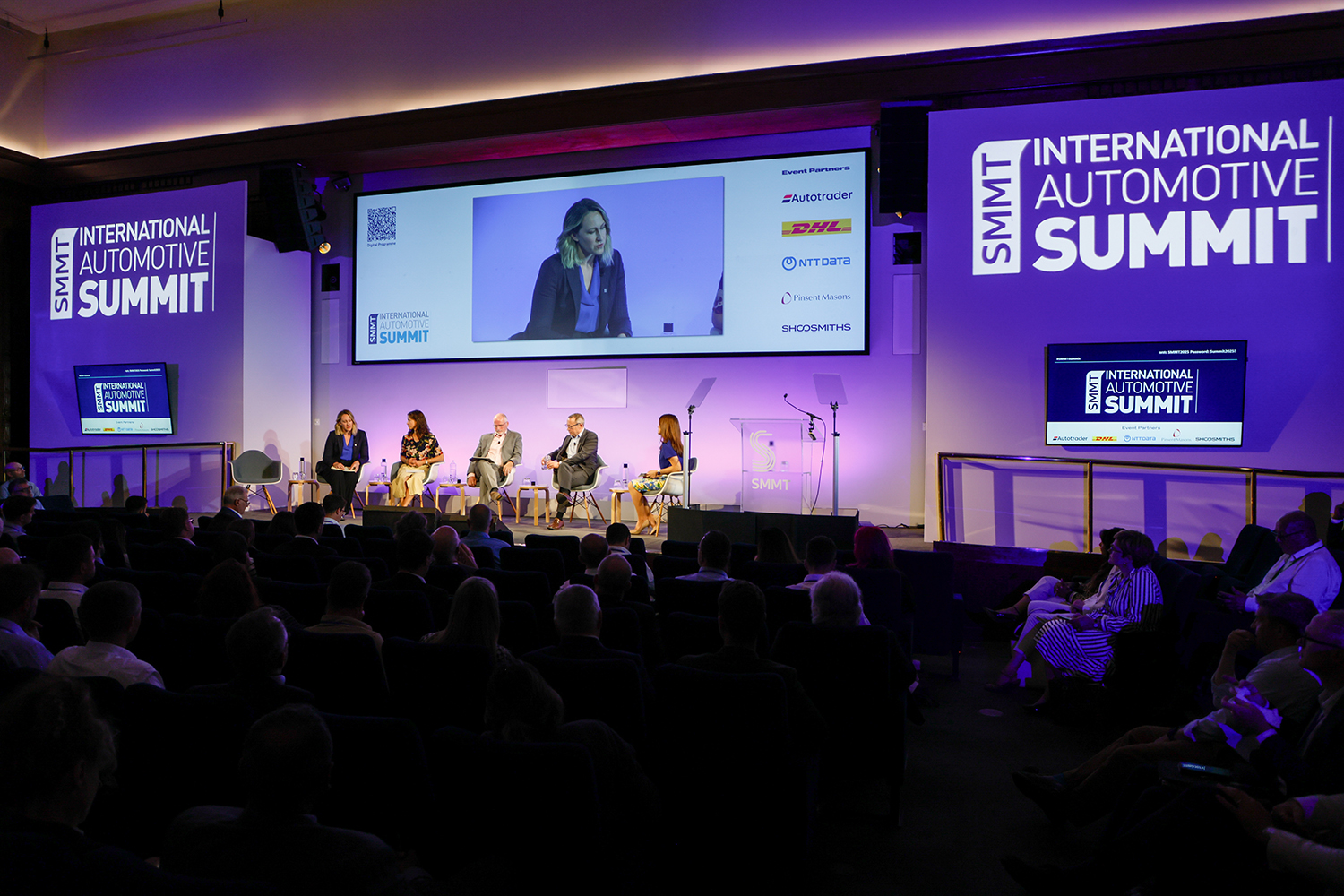
The 91制片厂官网鈥檚 annual International Automotive Summit took place this week, addressing the pressing issues facing the automotive industry and the commercial vehicle sector, and it boiled down to five key areas: international trade, the transition to net zero, technology, sustainability, and industrial strategy.
The summit gathered industry leaders, policymakers, and supply chain experts to address the challenges and opportunities facing trucks, buses, and vans in the coming decade.
While the broader agenda featured high-level discussions across the automotive spectrum, several standout sessions tackled issues directly impacting the commercial vehicle (CV) industry – from manufacturing resilience and sustainable supply chains to market adoption of zero-emission vehicles (ZEVs). For stakeholders in logistics, transport, and fleet management, the summit offered both insight and caution.
One of the most pertinent panels for the CV world was titled 鈥�UK Automotive Manufacturing 鈥� a Modern Industrial Strategy for a Modern Industry.鈥� Among the speakers was Phil Jones, Managing Director of Leyland Trucks, who stressed the importance of being flexible and also ensuring that the workforce is on board with what they are trying to achieve with regards to making the transition to electric vehicles.
He said: 鈥淲e have been manufacturing in Lancashire for 130 years, so we have had some longstanding employees and we need to take them on that journey: how you assemble that product and how you test and validate that product from a mechanical through to electrical, electronic cybersecurity and making sure you are checking through everything to make sure the systems work on the truck.鈥�
Echoing that, other panellists called for an industrial framework that supports innovation, workforce upskilling, and component-level investment, particularly in areas like battery systems, hydrogen drivetrains, and low-carbon logistics hubs.
The morning鈥檚 鈥淪ustainability Beyond the Tailpipe鈥� panel shifted focus from vehicle use to Scope 2 and 3 emissions – those embedded in manufacturing, logistics, and supply chains.
David Johnson, Michelin鈥檚 Head of Public Affairs UK and Ireland, contributed to this discussion emphasising the importance of the circular economy and the challenges the tyre manufacturers are facing, saying that they must find a way of 鈥渢aking an old truck tyre and making it into a new truck tyre.鈥�
He talked about the importance of suppliers that have sustainability at their heart: 鈥淔or many when you talk about rubber, they might immediately think 鈥榙eforestation鈥�, but that鈥檚 not the case,鈥� he stressed.
Johnson talked about sourcing rubber from low-volume suppliers that might only have between 2-3 hectares: 鈥淲hen a piece of rubber comes into our factory, we know exactly where it has come from.鈥�
He also remarked on how it was vital the tyre industry reduces the degradation of tyres in order to meet forthcoming mandatory thresholds.
鈥淭he highest profile issue with tyres these days is particulates,鈥� he added. 鈥淭hese are the particles that are formed as a function of grip with the road and therefore reducing those particles is particularly challenging without harming safety.
鈥淭hat challenge becomes even greater with EVs, with the added torque and the added weight of the vehicle. Road surface is important, driver behaviour is important, road management is important.鈥�
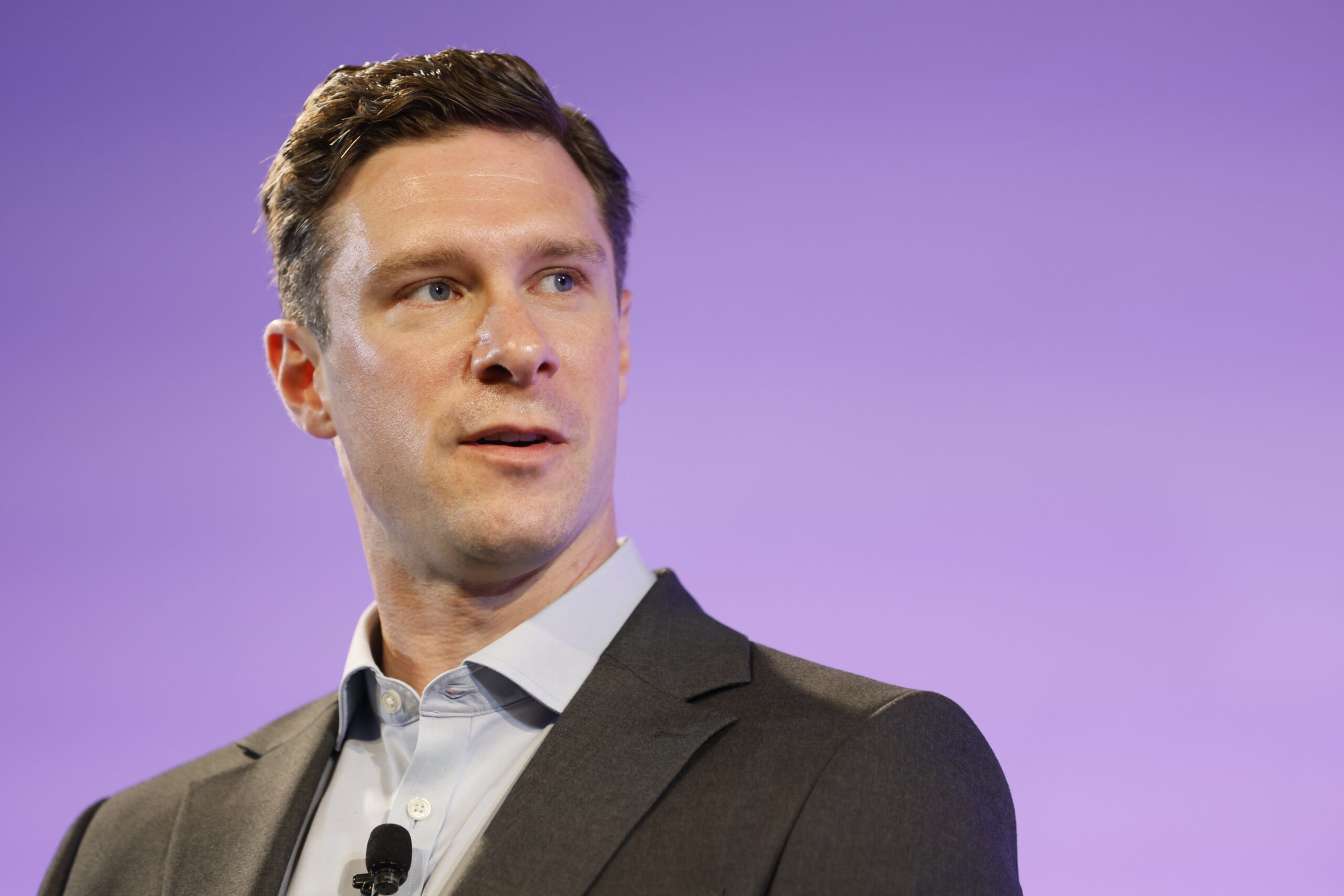
The next panel focused on technology and how it can improve the customer journey. With rapid technological advancements and shifting consumer expectations, technology is shaping the purchase, ease and safety of driving, ownership, maintenance and repair of vehicles. The panel explored how digitisation and software-defined technologies from AI and IoT to EVs and automated features are reshaping every touchpoint of the vehicle and customer journey.
James Tooze, Vice President of Operations DHL Supply Chain, said: 鈥淭here鈥檚 a real focus on the end-to-end customer experience. The OEMs are trying to provide a more personalised, connected omnichannel experience for the customers and what that is driving is a digital transformation within the supply chain. So as service providers in that space we need to concentrate on finding digitally powered supply chains that are resilient and agile because the networks change much quicker than they used to. We must also focus on providing end-to-end visibility, real-time visibility, and connectivity to enable the OEMs to deliver on their customer promise.
鈥淟ogistics services – five years ago, for example – were commoditised: there was a race to the bottom on price, but we are seeing a much more collaborative approach because of the acknowledgment of the importance of the end-to-end supply chain rather than just say, a truck or a warehouse service.
鈥淭ypically, with a transport management system you would have a lead time that says if we collect from this location here it will take two days to deliver it here. Now there is a more integrated approach because you are integrating with the carrier to provide visibility on the status of that delivery, and you are integrating with other services to show things like road closures, disruption in ports etc, to give an actual expected lead time. This digital solution enables you to reroute parts or expedite in a different way to provide a better service level.鈥�
Tooze, also pointed to the need for more autonomous vehicle because, in future, there will probably be fewer drivers available.
鈥淭here is an ageing workforce not just in DHL, but in all the UK logistics driving population,鈥� explained Tooze. 鈥淪o we need a solution for that. It鈥檚 pretty clear we are not going to be attracting lots of people into those jobs, so the answer needs to be more autonomously driven trucks. That is definitely a key consideration.
鈥淭here is a lot of stuff to get over: legislation, education for members of the public getting comfortable with that solution etc, but in terms of logistics and supply chain, autonomously driven vehicles is going to be absolute necessity.鈥�

Arguably the most direct and practical session for CV operators was with the panel: 鈥淢arket Update 鈥� Strategies to Stimulate the Market and Expedite the ZEV Transition in the Consumer and Commercial Sectors.鈥� This brought together thought leaders from across the ZEV supply chain to unpack the status of electric and low-emission truck adoption.
Simon Villanueva, Legal Director at Volvo Trucks, explained why EV sales have stalled or 鈥榩lateaued鈥� and why certainty for customers is key to increase the adoption of EVs. Most importantly he talked of the price point of EVs which can be a barrier.
鈥淲e plateaued at a low level,鈥� he explained. 鈥淎nd we are certainly not where we though we would be. We expected it to take off far quicker than it has.
鈥淥n the negative side are products are still very expensive 鈥� it is very difficult for our customers 鈥� but on the more positive side gas trucks do work, so for people who would otherwise be buying zero emissions are going that way. Of course, there鈥檚 also HVO, which is a swap for diesel at the owner/driver end of the market. That鈥檚 what they tend to do because it鈥檚 easy for them to do that and show CO2 savings. But gas and HVO won鈥檛 work for the long term with the legislation coming in 2035 and 2040, so we really need that zero emissions to take off.鈥�
Earlier in the day, the panel titled 鈥淎 Global Perspective 鈥� Geopolitics and Trade鈥� with Adrian Hallmark, CEO of Aston Martin, confirmed that the trade deal with the USA is 鈥榙one鈥� and that it would be signed off on June 30th.
Perhaps most outspoken was Sir Sherard Cowper-Coles, KCMG LVO, Chair of the China-Britain Business Council, who remarked: 鈥淭he USA has to recognise that empires rise and fall and we need to work with China to engage, collaborate and prosper. We have a lot to offer China and China as a lot to offer us. We are in a good position to exploit that relationship. Goodwill is on both sides.鈥�
Throughout the summit panellists and speakers did point to challenges ahead but the overarching sentiment was that of cautious optimism. New technologies, trade opportunities, decarbonisation and a new industrial strategy from the UK pointed to a positive future.
Chris Giles, Economics Editor of the Financial Times, said that although there had been turbulence over the past few years, Britain鈥檚 economy was in reasonable shape. The future is unpredictable but the rate of change both in terms of innovation, technology and geo-politics suggests that there is plenty to be optimistic about.
But while ambition is high, the path ahead still has potholes. As CV operators face fleet renewal decisions, the industry must provide solutions that are practical, financeable, and well-supported by both infrastructure and policy. The summit made clear that multi-fuel strategies, cross-sector partnerships, and long-term investment thinking will be essential to powering the UK鈥檚 commercial vehicle sector into a zero-emission future.