Double decker demand drives bus fleet renewal
12 Oct 2026
- New bus,聽coach聽and minibus聽market聽grows 3.1%聽in Q3 with 2,065 joining UK roads.
- Double decker demand up 64.2% to offset declines for minibus and single decker segments.
- Zero emission bus uptake rises 11.9% to claim almost a third of the market.
Data download
Bus & Coach Q3 registations
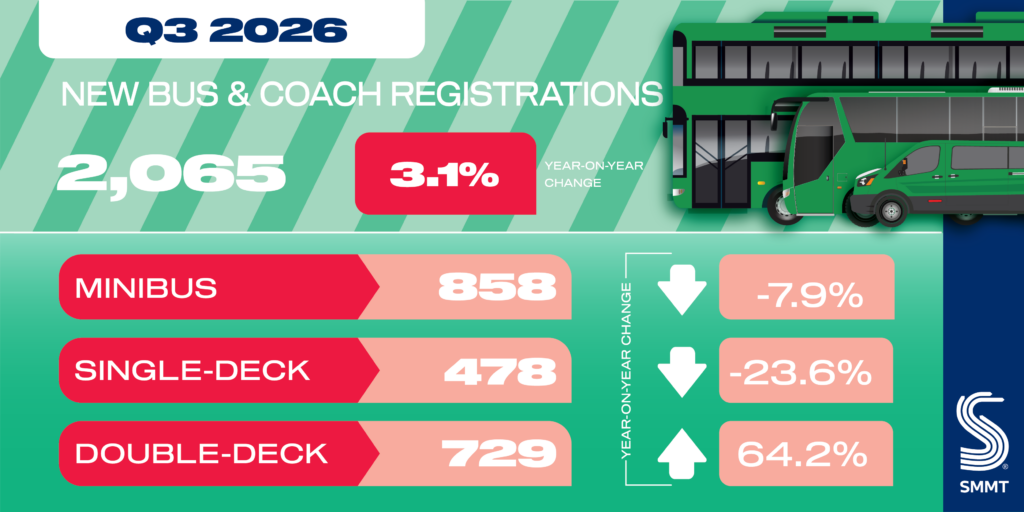
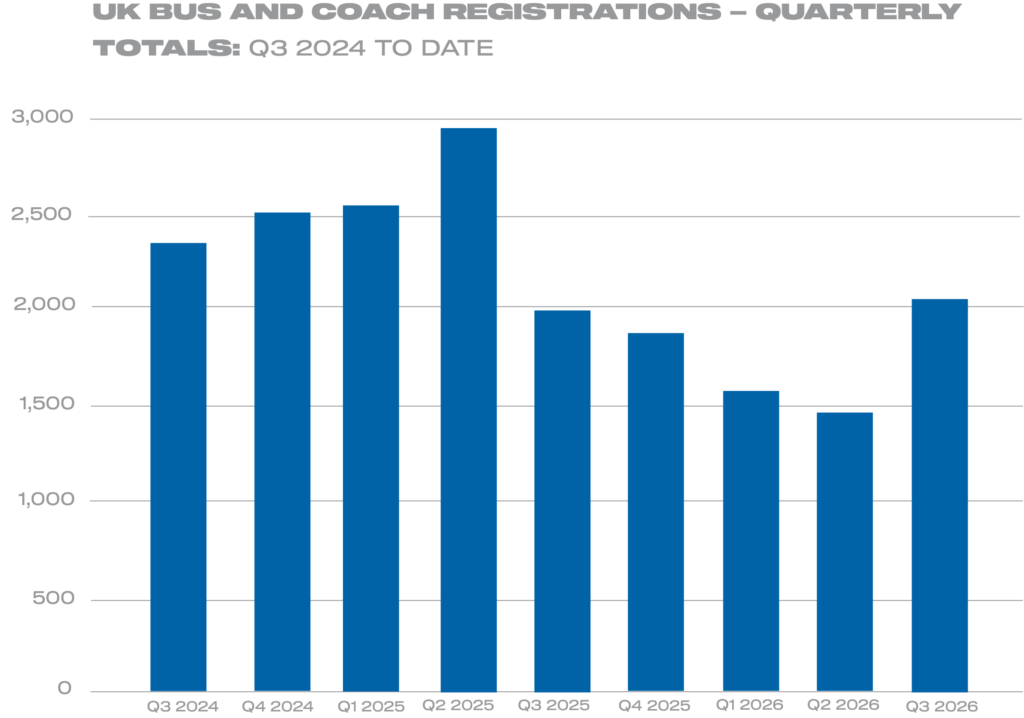
Britain鈥檚 rollout of new buses, coaches and minibuses rose 3.1% to 2,065 units in the third quarter of 2026, according to the latest figures published today by the Society of Motor Manufacturers and Traders (91制片厂官网). The performance represents the first quarter of growth in 2026, with year-to-date volumes down almost a third (-32.1%), as the market normalises after a 17-year high in fleet renewal in 2025.1
The quarterly growth was underpinned by double-deck buses, up 64.2% to 729 units, reflecting the ongoing fulfilment of long-term urban fleet renewal programmes. Minibus uptake fell by -7.9% to 858 units, although it remained the largest volume segment, while single-deck bus and coach registrations also declined, by -23.6% to 478 units.
England claimed the lion鈥檚 share of fleet renewal, up 10.6% to 1,926 units, representing more than nine in 10 (93.3%) registrations. Deliveries fell in Scotland and Wales, by -55.2% and -25.0% to 86 and 45 units respectively, while Northern Ireland registered eight units 鈥� the same as in Q3 last year.
Zero emission bus rollout continued to grow, rising 11.9% to 630 units, to claim almost a third (30.5%) of the market 鈥� up from 28.1% in Q3 2025 but below the record 37.3% set in Q1 last year. Across the year to date, zero emission buses account for 31.1% of registrations 鈥� a significantly higher share than the UK鈥檚 other vehicle markets.2 The growth highlights the sector鈥檚 leading position in market decarbonisation in the UK and Europe, as the continent鈥檚 second largest zero emission bus market by volume so far this year.3
Britain鈥檚 bus leadership can be reinforced by tackling remaining barriers to zero emission uptake. Wider access to incentives, such as the Zero Emission Bus Regional Area and ScotZEB schemes, would help more operators meet the higher upfront costs of these vehicles and depot infrastructure. GB Grid could also help speed up depot connections, which currently can take up to 15 years for the largest projects. Meanwhile, from January 2027, England鈥檚 拢2 bus fare cap should give operators greater confidence in passenger demand, supporting investment in renewing Britain鈥檚 ageing bus fleet and delivering significant carbon savings.
A return to growth in new bus rollout after a bumper 2025 reflects the sector鈥檚 increasing momentum, with significant government backing and a wide range of cutting-edge models entering service. Manufacturers are investing heavily in zero emission technology that can meet almost every bus operator鈥檚 need 鈥� but access to incentives and depot grid connections remain key barriers. With continued support, the new bus market will continue to lead decarbonisation in the UK 鈥� and in Europe.
Notes to editors
- 91制片厂官网, .
- Year-to-date UK new zero emission vehicle market shares: cars, 26.2% (September 2026); light commercial vehicles, 10.8% (September 2026); heavy goods vehicles, 1.0% (Q3 2026).
- ACEA鈥檚 latest of new 鈥榚lectrically chargeable鈥� buses: UK, 1,154 units; Italy, 1,667 units.