Healthy situation: How the NHS is electrifying its fleet
20 May 2026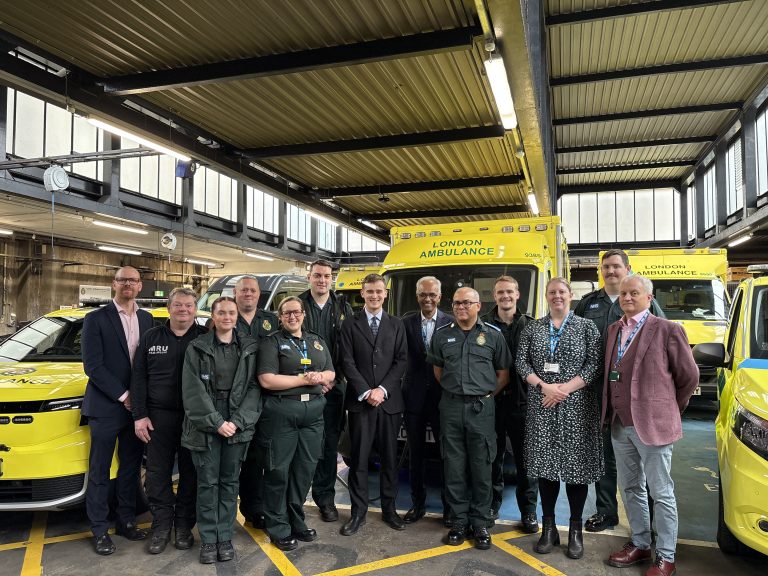
With more than 20,000 vehicles clocking up more than 460 million miles each year, the NHS runs one of the largest vehicle fleets in the country.
From ambulances and patient transport vehicles to maintenance and essential delivery vans, they all help keep the health service moving and play a key role in delivering frontline services.
As a responsible organisation, the NHS is committed to having a fully decarbonised fleet by 2040, delivering savings in fuel and maintenance costs that can be redirected into front-line care.
To help with the transition, the health service in England received 拢4 million to introduce hundreds of new EV charging sockets earlier this year, thanks to the Department for Transport (DfT) extending its NHS Chargepoint Accelerator Scheme.
The announcement brings total government investment in NHS charging infrastructure to 拢22 million, following the Department for Health and Social Care awarding NHS trusts 拢10 million, as well as 拢8 million awarded from the DfT last year.
Aviation, Maritime and Decarbonisation Minister, Keir Mather MP,s said: 鈥淏acking the switch to electric for our NHS fleet will save our health sector millions and help to clean up 460 million miles worth of journeys across England – that鈥檚 good for taxpayers, patients, and our communities.
鈥淲ith over鈥�116,000鈥痯ublic chargers now on UK roads, our investment is transforming the UK鈥檚 public charging network so more drivers can make the switch to electric with confidence.鈥�
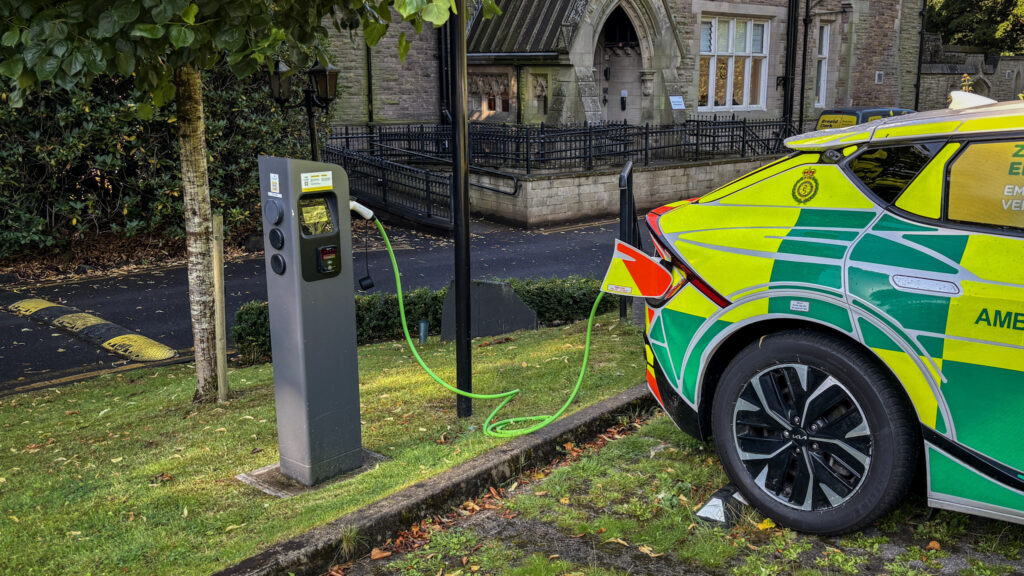
Under the Chargepoint Accelerator scheme, the North West Ambulance Service (NWAS) received 拢298,000 to install new charge points at nine of its sites in the North West.
These include Fazakerley station, Altham station, Fulwood (Transport Logistics), Salkeld Hall, Broughton workshop, Penrith station, Preston Driving Training Centre, Barrow station and Kendal station.
For example, a fast charger was installed at the ambulance station in Fazakerley, ready for the trial of a fully electric ambulance in Liverpool.
NWAS already had about 170 individual charge points across all its sites, supporting more than 100 electric vehicles in its frontline and support fleet.
This latest investment is expected to deliver savings of 拢130 million for the NHS over the next 25 years, with an estimated average return on investment in four years.
The wider social benefits from reduced emissions and improved air quality are valued at an extra 拢93 million.
Jon Makin, NWAS Head of Fleet and Logistics, said: 鈥淲e are very thankful, as ever, to have received this grant as we continue to expand our green fleet of EVs and the charging network needed to support it.
鈥淚t鈥檚 often the requirements for the new EV fleet that triggers decarbonisation of our sites and buildings as work behind the scenes to secure improve necessary power supplies for vehicles, means that further sustainability improvements can then be started within the estate.鈥�
London Ambulance Service (LAS) is committed to reducing its environmental impact and has reduced its carbon emissions by 12% over the past three years.
It is looking to build on this success by cutting carbon emissions by a further five per cent each year between now and 2029.
A key part of this plan is investment in sustainable vehicles and the phasing out diesel and other polluting vehicles as they reach the end of their working lives.
Its fleet currently includes electric Ford ambulances, a new Ford Explorer car, a Ford Mustang and a Mercedes eVito, as well as the EV charging infrastructure that powers them.
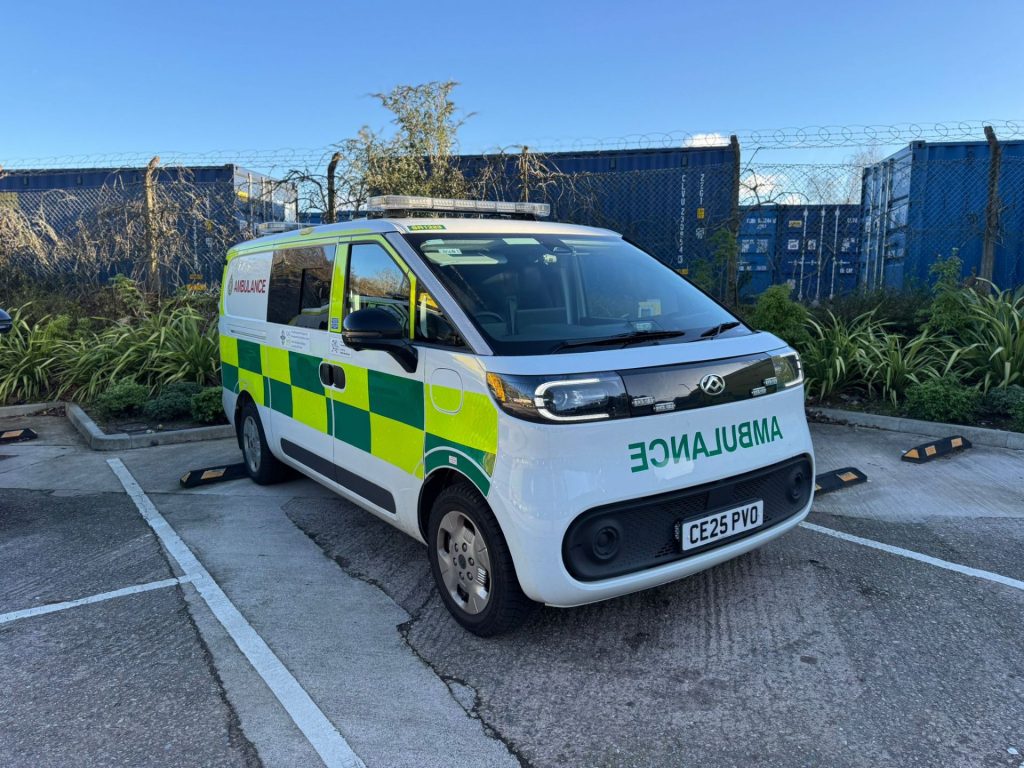
It has also installed several EV chargers at its facility in Waterloo thanks to 拢690,525 in funding from DfT, as well as other chargers at Heathrow airport and at additional hubs in the capital.
Paramedic Oli Pond, based at Oval Ambulance Station, praised modern electric ambulances.
He added: 鈥淭hey are comfortable, easy to drive and provide a good environment to assess patients.
鈥淎lso, they are quieter than a diesel engine which is better for patients with sensory issues who may struggle with loud noises.
鈥淯nlike diesel which might need filling up during the shift, these can easily cover the whole shift on a charge which means we can keep on the road for longer and helps our response times to patients.鈥�
Meanwhile, the Welsh Ambulance Service has recently introduced a batch of new electric vehicles to its fleet of 800 following a 拢22.4m investment by the Welsh Government.
They include ten Maxus eDELIVER 5 models and 20 Ford Transit Custom plug-in hybrid vehicles.
These are equipped with a range of driver assistance technologies, such as adaptive cruise control, automatic emergency braking, lane-keep assist and blind spot assist, all of which help reduce driver fatigue and enable crews to focus fully on patient care.
The single responder vehicles, which are used predominantly by advanced paramedic practitioners and Cymru high acuity response unit paramedics, are operating across Wales, including in Wrexham, Aberystwyth, Gelli, Bryncethin, Neath, Swansea, Blackwood and Cardiff.
Paramedics are also able to re-charge their vehicles at numerous charging points at stations across Wales.
The North East Ambulance Service (NEAS) has introduced a fleet of EVs as part of its drive to support patient care while reducing environmental impact.
New vehicles acquired include a Skoda Enyaq rapid response vehicle, Renault E-Master ambulance and patient transport models, as well as a Ford E-Transit ambulance.
Moving to electric vehicles is therefore helping to make the NHS fit for the future – improving air quality, reducing CO2 from diesel emissions and making the overall experience better for patients and staff.