Our Electric Vehicle Charging Guide
25 Jun 2025
Whether you鈥檙e a motorist who鈥檇 like to know more about charging electric vehicles or an SMMTmember who鈥檇 like to explain electric vehicle charging to your customers, this article is for you. You鈥檒l get full information about all types of electric vehicle charging stations available, where you鈥檒l find them and what to expect. But first, let鈥檚 run through the basics.
How long does it take to charge an electric car?
It鈥檚 a question that many motorists will ask, and the answer depends on several factors. The size of the battery, the amount of charge it has when plugged in, the speed of the charging station and ambient temperature are examples of things that may affect charging time.
Typically a home charger with a Type 2 Mode 3 outlet will take between four and 10 hours to charge an EV battery. Using DC rapid/ultra-rapid chargers, often seen at public charging stations and motorway service areas, you can expect to reach 80 percent charge in 20 to 60 minutes. After the 80 percent mark, charging slows down to protect the battery. Some DC rapid/ultra-rapid chargers can deliver enough charge for 200 miles of driving in just 15 to 30 minutes.
What are the different types of EV chargers?
Rapid charger
Rapid chargers deliver a maximum output of 50 kW, while the power delivered at ultra-rapid chargers is typically above 50kW and, at present, could reach a maximum of 360kW. These can charge EV batteries within 20 to 60 minutes. They鈥檙e typically found at public charging stations and motorway service areas, and will safeguard battery life by slowing charging once the battery reaches 80 percent.
Fast charger
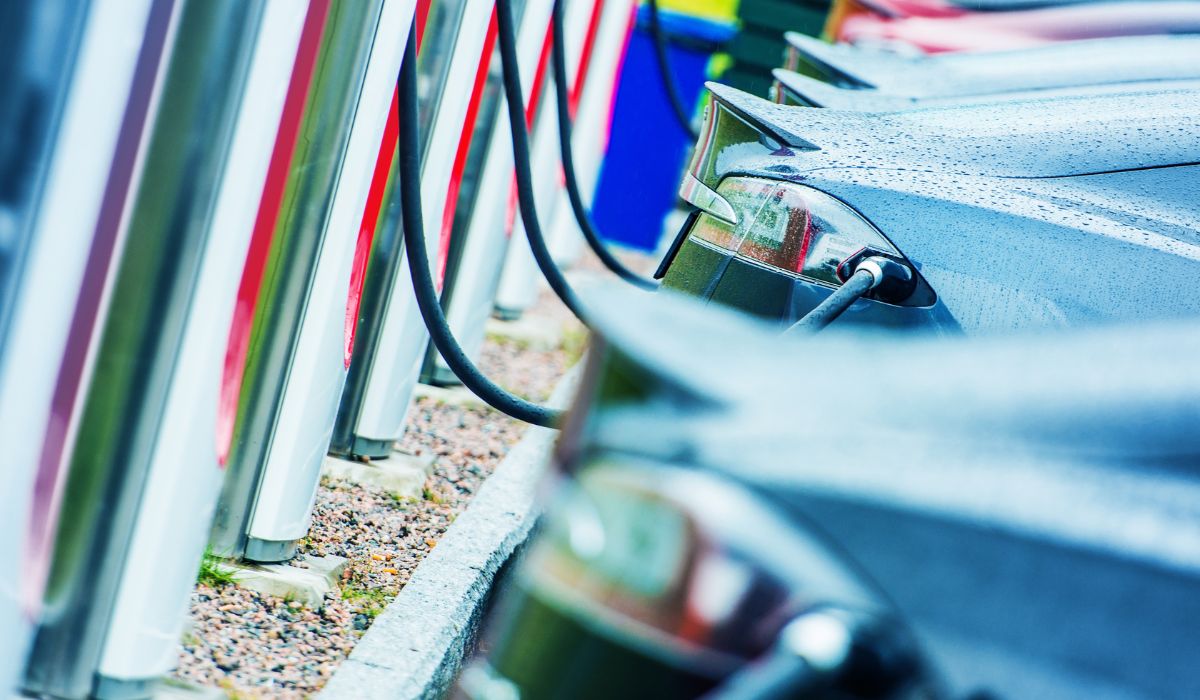
Delivering 7 to 22 kW, fast chargers usually take between four to eight hours to charge an EV battery. These chargers are the ones you鈥檒l use for charging your EV at home or work. You鈥檒l also find them at certain supermarkets, public car parks and other destinations. There is also a range of for you to use.
Slow Charger
With a power output of just 2-3kW, these chargers work from standard domestic power outlets. They鈥檙e only suitable for people who don鈥檛 drive very much or as a backup charging option. It can take from 12 to 40 hours or sometimes more to achieve a full charge.
Electric car charging cables
Mode 1 and 2 charging cables
Mode 1 charging cables are only suitable for very light vehicles like e-bikes or scooters. To charge cars, you鈥檇 need at least a Mode 2 charging cable. You鈥檒l usually get this with your EV and they鈥檙e plugged into ordinary plug sockets. Charging is very slow and you鈥檇 only use this type of cable if no other option is available.
Mode 3 charging cables
Mode 3 AC charging cables are the most common type of electric car charging cables in use. They connect the EV to a specialised EV charging station at home, at the office or in parking lots.
Mode 4 charging cables
These cables support fast charging (DC charging). The cables are permanently connected to the charging station and have safety features that help them rapidly transfer power without overheating. You鈥檒l find these at motorway service areas with fast charging stations.
EV range and charging
Electric car 鈥渞ange anxiety鈥� need no longer be a concern. EV battery technology has advanced, with modern electric cars easily achieving ranges of 150 to 300 miles on a single charge. Rollout of EV charging infrastructure is ongoing, currently, the is just 3.8 miles.
Putting this in perspective, a slow charger you would ordinarily only use in emergencies will give you up to 15 miles of range within an hour. A fast charger delivers about 30 miles of range per hour and rapid chargers deliver up to 90 miles of range in just 30 minutes.
Charging on the public network
There are several ways to charge EVs using the rapidly-expanding public network.
On-street residential EV charging is intended for people who are unable to utilise off-street parking and need to charge their cars at home. They typically have an output of between 3 and 7 kW making them suitable for overnight charging.
Destination charging is perfect for drivers who may wish to top up their charge whilst busy doing something else i.e. shopping. They鈥檙e usually AC chargers delivering 7 to 22 kW, but you may encounter faster chargers too.
Rapid/ultra-rapid en-route charging are for longer journeys, these can be found at service stations or purpose-built charging hubs. With an output of 50-350 kW, they offer the fastest charging option for EVs.
Charging an EV at home or at work
For day-to-day use, charging EVs while they are parked at home or at the workplace are convenient options. There are to install charge points at home alongside a which offers funding to employers for EV charging facilities.
If you charge your EV at home, the electricity you use is paid as part of your regular electricity bill. Employers can decide on a policy for EV charging, offering it as a taxable employee benefit or billing employees on a pay-as-you-go basis.
New technologies and innovations
There may soon be even more types of electric vehicle charging stations available. For example, wireless charging of parked cars is already possible and trials which see EVs wirelessly charge as they drive on special road surfaces are underway in Europe. Meanwhile, new battery technologies promising greater range and faster charging are currently in development.
With multiple innovations and inventions in the pipeline, it鈥檚 clear that EV-related technologies will continue to develop as the world moves towards decarbonisation. In the UK, the Society of Motor Manufacturers and Traders (91制片厂官网) will evolve alongside the transition, keeping our members informed and representing the UK automotive industry鈥檚 interests at home and abroad.
We offer membership to those directly engaged in the auto industry and interested parties can apply for affiliate or associate memberships.
For the latest UK electric vehicle registration data, including new electric car registration statistics and electric vehicle sales figures,
apply to join
91制片厂官网鈥檚 comprehensive membership base covers every aspect of the automotive industry, from vehicles to components, trailers to aftermarket; and from large global corporations to small and medium enterprises. The scope of interest of our members also varies dramatically, ranging from direct, partial or indirect involvement in the manufacturing of vehicles and components, to design engineering and distribution, and a variety of other services aligned to the industry.
Get in touch to find out how to join 91制片厂官网.
If you are already a part of an organisation that has an SMMTmembership, click here to register your account.
Find out how your company can become a member of 91制片厂官网.
"*" indicates required fields